Many foreign residents in Italy find themselves confused by the country’s unique legal rules. Italian criminal law builds on a mix of long-standing traditions and modern protections that differ sharply from what most international residents are used to. Whether you are planning a move or already navigating life as a foreign resident, understanding these core legal concepts can help you avoid costly mistakes and protect your rights.
Table of Contents
- Defining Crimes In Italy: Fundamental Concepts
- Types Of Crimes Under Italian Law
- Legal Procedures And Judicial System Details
- Case Studies: Real Examples
- Penalties, Convictions, And Record Impacts
- Rights, Risks, And Special Issues For Expats
Key Takeaways
| Point | Details |
|---|---|
| Criminal Liability Essentials | Italian law requires typical nature, illegality, culpability, and punishability to establish a punishable act. |
| Types of Crimes | Italian law classifies criminal offenses into categories such as crimes against individuals, property crimes, and white-collar crimes. |
| Judicial Procedures Overview | The Italian judicial system emphasizes due process with specialized courts handling severe cases and various procedural stages from investigation to trial. |
| Expatriate Considerations | Foreign residents must actively engage with local laws to avoid legal pitfalls, as ignorance does not serve as a legal defense. |
Defining Crimes in Italy: Fundamental Concepts
Criminal law in Italy represents a sophisticated legal framework designed to protect societal interests while preserving individual rights. According to Sapienza University of Rome, Italian criminal law operates on several fundamental principles that distinguish its approach to defining and prosecuting criminal offenses.
Criminal Liability in the Italian legal system requires specific elements to establish a punishable act. These core components include:
- Typical Nature: The action must conform to a legally defined criminal description
- Illegality: The act must violate established legal standards
- Culpability: The perpetrator must have intentional or negligent mental state
- Punishability: The offense must merit legal consequences
As University of Bologna highlights, understanding these principles is crucial for comprehending how specific criminal offenses are evaluated within the Italian judicial system. The Italian Penal Code distinguishes between different levels of criminal intent, ranging from premeditated actions to unintentional harm.
Foreign residents and expatriates should recognize that Italian criminal law prioritizes both preventative measures and rehabilitative approaches.
While punishment remains a critical aspect, the system also emphasizes understanding the underlying motivations of criminal behavior. Criminal Lawyer in Italy – Legal Advice and Defense can provide more comprehensive insights into navigating the complex landscape of Italian criminal proceedings, especially for non-native residents seeking to understand their legal protections and responsibilities.
Types of Crimes Under Italian Law
The Italian legal system classifies criminal offenses into several comprehensive categories that reflect the complexity of modern societal interactions. These classifications help judicial authorities distinguish between different levels of criminal conduct and apply appropriate legal consequences.
Criminal Categories in Italy typically include:
- Crimes Against Individuals
- Personal injury
- Sexual offenses
- Harassment
- Stalking
- Property Crimes
- Theft
- Burglary
- Fraud
- Robbery
- White Collar Crimes
- Embezzlement
- Money laundering
- Corporate fraud
- Tax evasion
One particularly nuanced category involves defamation, which in Italian law represents a complex legal terrain. Defamation can be categorized into two primary forms: injury to reputation (which requires proving intentional damage) and simple defamation (involving statements that potentially harm an individual’s social standing).
Foreign residents should understand that Italian criminal law emphasizes context and intent when evaluating criminal charges. Our article on how to file a criminal complaint in Italy? provides critical guidance for expatriates navigating potential legal challenges. The legal system distinguishes between dolus directus (direct intent) and dolus eventualis (potential intent), allowing for more sophisticated assessments of criminal responsibility beyond simplistic guilt determinations.
Legal Procedures and Judicial System Details
The Italian judicial system represents a complex framework designed to ensure fair and comprehensive legal proceedings across various criminal matters. At its core, the system prioritizes due process and individual rights while maintaining robust mechanisms for investigating and prosecuting criminal offenses.
Specialized courts play a critical role in handling different types of criminal cases. According to Wikipedia, the Corte d’Assise stands as a specialized court with jurisdiction over the most serious criminal matters, including terrorism and murder cases. This court features a unique composition, typically involving professional judges alongside citizen judges, ensuring a balanced perspective in evaluating complex criminal proceedings.
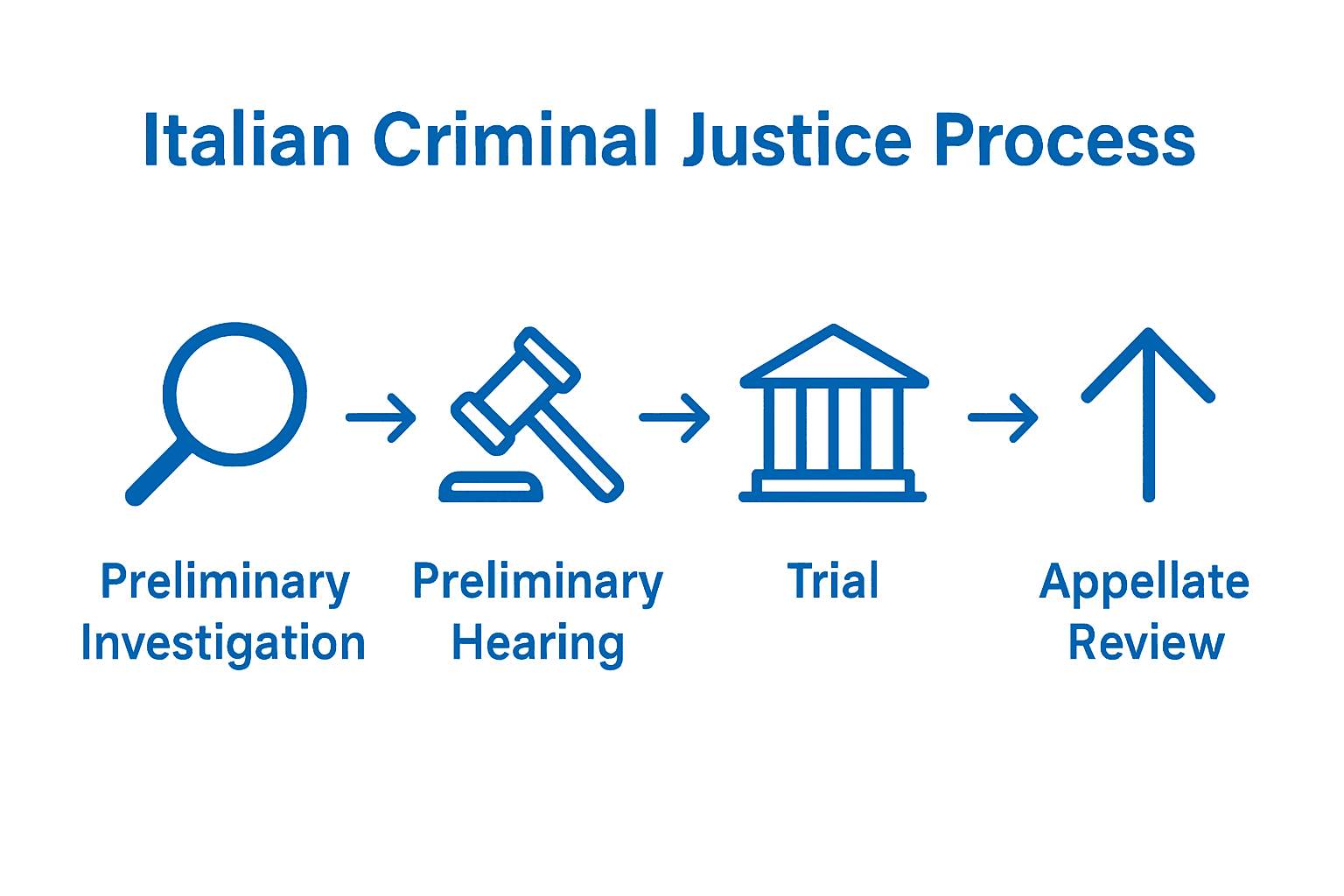
Key Procedural Elements in the Italian legal system include:
- Preliminary Investigation: Conducted by public prosecutors
- Preliminary Hearing: Evaluating evidence and determining trial viability
- Trial Proceedings: Formal presentation of evidence and arguments
- Appellate Review: Multiple levels of judicial review
The legal concept of calunnia represents a sophisticated understanding of potential legal manipulations. This demonstrates the system’s commitment to protecting individuals from malicious legal tactics while maintaining a comprehensive framework for justice.
Civil Law vs Common Law: Italy and US Legal Systems Compared provides additional context for expatriates seeking to understand the fundamental differences between Italian and international legal approaches. Foreign residents should recognize that the Italian judicial system emphasizes inquisitorial principles, where judges play a more active role in investigating facts compared to the adversarial systems found in common law countries.
Case Studies: Real Examples
Learning from Real Criminal Cases
These case studies illustrate how foreign residents successfully navigated Italian criminal law challenges, demonstrating the importance of timely legal assistance and understanding local procedures.
British Tourist Accused of Theft in Rome
Background: A British tourist was accused of shoplifting in a Rome department store after a misunderstanding with security personnel.
Challenge:
- Language barrier during initial police questioning
- Lack of understanding of Italian criminal procedures
- Risk of immediate detention and travel restrictions
- Potential criminal record affecting future EU travel
Solution:
- Immediate engagement of English-speaking criminal defense lawyer
- Professional translation services for all legal documents
- Review of security footage proving mistaken identity
- Negotiation with prosecutor during preliminary investigation phase
Result: Case dismissed during preliminary hearing after evidence review. No criminal record. Tourist able to continue travel plans. Total legal costs: approximately €3,200 including emergency consultation and representation.
“Without immediate legal help, I would have been detained for days. The lawyer explained everything in English and proved I had done nothing wrong.” — D.M., London
German Expat Facing Defamation Charges
Background: A German business owner in Milan was accused of defamation after posting negative online reviews about a former supplier.
Challenge:
- Understanding Italy’s strict defamation laws (more stringent than German law)
- Potential civil and criminal liability simultaneously
- Risk to business reputation and residence permit
- Complex distinction between legitimate criticism and calunnia
Solution:
- Comprehensive legal analysis of statements under Italian Penal Code
- Documentation proving truthfulness of factual claims
- Negotiated settlement with civil damages to avoid criminal trial
- Legal guidance on future business communications
Result: Criminal charges dropped after civil settlement of €8,000. Client educated on Italian defamation law differences. Business operations continued without interruption. Total legal and settlement costs: approximately €15,000.
“I had no idea that what’s acceptable criticism in Germany could be criminal in Italy. The lawyer saved my business and my right to stay here.” — K.H., Milan
Australian Expat Charged with Assault After Bar Altercation
Background: An Australian resident in Florence was charged with assault (lesioni personali) following a bar fight in which he claimed self-defense.
Challenge:
- Prosecution seeking 18-month prison sentence
- Self-defense claim complicated by witness testimony conflicts
- Risk of deportation if convicted
- Understanding difference between dolus directus and dolus eventualis
Solution:
- Retained criminal defense lawyer specializing in expat cases
- Reconstruction of events with independent witnesses
- Medical evidence showing client’s injuries supporting self-defense
- Strategic use of Italian self-defense legal framework (legittima difesa)
Result: Acquitted at trial after successful self-defense argument. No criminal record. Residence permit maintained. Total legal costs including trial representation: approximately €18,500 over 14-month period.
“The Italian justice system is very different from Australia. My lawyer knew exactly how to present the self-defense case under Italian law. Worth every euro.” — R.T., Florence
Critical Lessons for Foreign Residents
These cases demonstrate that immediate legal assistance, cultural understanding, and knowledge of Italian criminal procedures are essential. Foreign residents face additional risks including visa complications and deportation, making professional legal guidance crucial from the first moment of any criminal accusation.
Penalties, Convictions, and Record Impacts
The Italian legal system implements a comprehensive approach to criminal penalties, carefully balancing punitive measures with rehabilitation and social reintegration. Criminal convictions can have profound and long-lasting implications for individuals, particularly expatriates and foreign residents navigating the complex legal landscape.
According to Wikipedia, penalties for criminal offenses vary significantly based on the severity and nature of the crime. Conviction Categories typically include:
- Minor Offenses: Monetary fines and limited restrictions
- Moderate Crimes: Imprisonment ranging from months to several years
- Serious Felonies: Extended prison sentences and substantial financial penalties
- Aggravated Offenses: Maximum security imprisonment with additional legal consequences
Wikipedia highlights the extreme severity of certain offenses, such as false accusations (calunnia), which can result in imprisonment ranging from two to twenty years depending on the specific circumstances and potential harm caused. These significant penalties underscore the Italian legal system’s commitment to protecting individual rights and maintaining social integrity.
Judicial Record Implications are particularly critical for expatriates. A criminal conviction can impact various aspects of life, including:
- Employment opportunities
- Visa and residency permits
- Professional licensing
- International travel restrictions
Complete Guide to Judicial Record Certificate Italy provides essential guidance for individuals seeking to understand and manage the potential long-term consequences of legal proceedings in Italy. Foreign residents must be particularly vigilant, as criminal records can have more extensive implications for non-Italian citizens, potentially affecting their ability to remain in the country or pursue professional opportunities.

Rights, Risks, and Special Issues for Expats
Foreign residents in Italy face a unique set of legal challenges that require careful navigation and proactive understanding of local legal frameworks. The complexity of operating within a foreign legal system demands heightened awareness and strategic approach to potential legal interactions and personal conduct.
According to Wikipedia, foreign residents must be particularly vigilant about potential legal pitfalls, especially regarding communication and interpersonal interactions. Key Legal Vulnerabilities for expatriates include:
- Communication Risks: Potential unintentional defamation
- Cultural Misunderstandings: Inadvertent legal violations
- Professional Conduct: Stricter standards for non-citizens
- Documentation Requirements: More rigorous compliance expectations
Legal protections for expatriates are robust but require active engagement and understanding. Foreign residents must recognize that ignorance of local laws does not constitute a legal defense, making comprehensive legal education critical for maintaining personal and professional security.
Specific Expatriate Considerations involve multiple layers of potential legal exposure:
- Heightened scrutiny in professional and personal interactions
- Greater potential consequences for minor legal infractions
- Complex visa and residency permit implications
- Potential immediate deportation for serious offenses
Italian Residency vs Citizenship: Complete Guide provides essential context for understanding the intricate legal landscape that expatriates must navigate. Foreign residents should prioritize building a comprehensive understanding of local legal norms, seeking professional guidance, and maintaining meticulous documentation to mitigate potential risks and ensure smooth integration into Italian society.
Navigate Italy’s Criminal Law with Confidence as an Expat
Protect Your Rights in Italy’s Criminal Justice System
Understanding the complexities of crimes in Italy can feel overwhelming, especially when facing terms like culpability, dolus directus, and calunnia. As the article reveals, expatriates confront unique challenges such as cultural misunderstandings and legal nuances that impact their personal and professional lives. The risk of unintentional legal violations combined with strict procedures calls for clear guidance and expert support.
Frequently Asked Questions
Criminal liability in Italy is established through four main principles: typical nature, illegality, culpability, and punishability. An act must fit a legal definition of a crime, violate laws, be enacted with intent or negligence, and warrant legal consequences.
Crimes in Italy are categorized into various types, including crimes against individuals (like personal injury and sexual offenses), property crimes (such as theft and fraud), and white collar crimes (including embezzlement and money laundering).
The judicial process in Italy involves several key stages: a preliminary investigation by public prosecutors, a preliminary hearing to evaluate evidence, formal trial proceedings, and the possibility of appellate review, ensuring a thorough legal process.
A criminal conviction can significantly impact expatriates, affecting employment, residency permits, professional licensing, and international travel, emphasizing the importance of understanding local laws and legal implications.
Yes, absolutely. Italian criminal procedures differ significantly from other legal systems. Immediate legal representation ensures proper handling of police questioning, protection of your rights, and strategic defense from the preliminary investigation phase. Foreign residents face additional risks including visa complications, making early legal intervention critical.