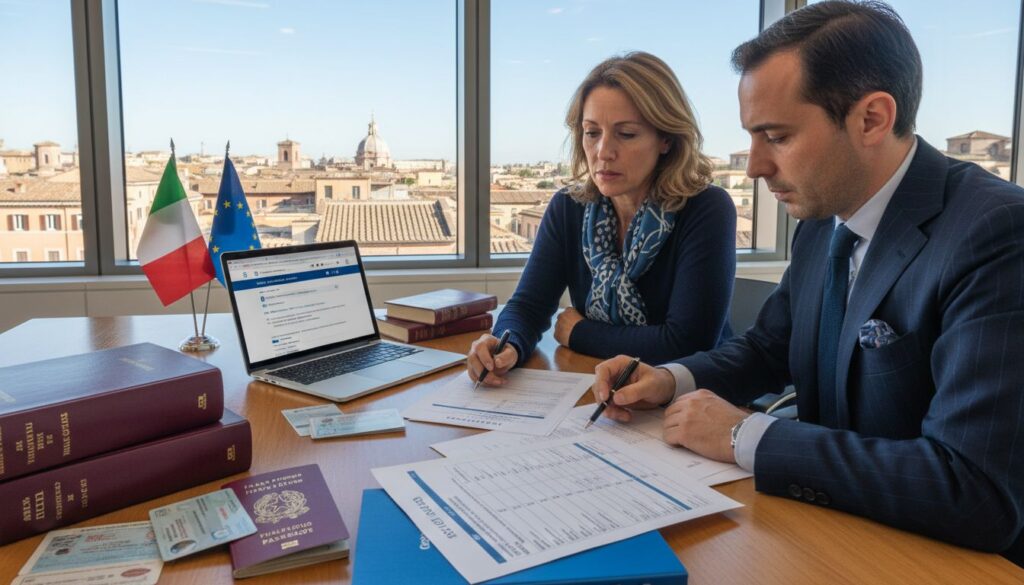
Why Power of Attorney Gives Expats Peace of Mind in Italy
Power of attorney in Italy, called procura, is a legal document that lets you authorise someone you trust to act on your behalf. For expats who own property, plan to buy or sell, or need to deal with Italian offices from abroad, it can be the difference between smooth progress and frustrating delays. Instead of rearranging work, flights, and accommodation for every signature, you can appoint a reliable professional to stand in for you.
When a power of attorney is drafted carefully, it can save multiple trips, prevent missed deadlines and keep important transactions moving while you stay at home. That might mean signing a preliminary contract for a flat along the Amalfi coast, completing a sale in northern Italy or dealing with a stubborn municipal office. The key is that you stay in control: the power is limited, clear and tailored to your actual needs, not a blank cheque.
Many expats worry that giving a power of attorney is risky. In our experience, the real risk lies in vague or overly broad documents. A well-drafted procura, handled by a regulated Italian lawyer, is a safe, controlled tool that lets you protect your interests without constantly being on Italian soil.
Key Types of Power of Attorney in Italy Explained
Italian law distinguishes mainly between general and special powers of attorney. Understanding the difference helps you avoid giving away more authority than you intended.
A general power of attorney authorises the representative to carry out a wide range of acts, often of an ordinary administrative nature. It might be used, for instance, for ongoing management of a business or multiple recurring tasks. For most expats, this is rarely necessary.
A special (or limited) power of attorney is usually the best option. It is tied to specific acts, such as:
- Buying a defined property identified by address and land registry details
- Selling one specific property under agreed price conditions
- Signing a specified contract, such as a tenancy or renovation agreement
- Dealing with a clearly described administrative matter or court case
For many transactions, especially involving real estate or high-value contracts, a notarial power of attorney is required. This means the document is signed before a notary and has the same formal strength as if you were present at the final deed. Notarial powers of attorney are typical for:
- Property purchases and sales
- Mortgage deeds
- Company formation or changes to company structure
- Certain complex or high-value contracts
You remain free to set duration, scope and limits. A power of attorney can:
- Be valid only until a certain date or until a specific act is completed
- Be geographically limited, for example to acts in Italy only
- Be revoked at any time, provided revocation is properly notified
The art lies in being precise, so that your representative can do exactly what is needed and nothing more.
Using Power of Attorney for Italian Property Deals
Property transactions are where power of attorney in Italy is used most often by expats. A typical purchase involves several stages, and you might not want or be able to fly in for each one.
In a standard process, a special power of attorney can cover:
- Acceptance or signing of a reservation proposal, on agreed terms
- Signing of the preliminary contract, including any conditions you require
- Signing of the final notarial deed of sale and any related mortgage deed
Your lawyer can receive drafts in advance, check terms, negotiate changes with the seller or their agent, and then sign once you give written approval. The Italian notary, who is a public officer, verifies identities, checks compliance with anti-money laundering rules and ensures that the transfer and mortgage are validly executed.
Due diligence on the property is essential and can include:
- Confirming the seller is the true owner
- Checking the land registry for mortgages or liens
- Verifying building permits and planning compliance
- Reviewing condominium rules and past service charge issues
Common fears for expats include being tied to an unfair price, discovering hidden debts, or facing unexpected taxes. These risks are reduced when:
- The power of attorney clearly states price limits and conditions
- The lawyer reports back to you in writing before each signature
- Tax implications are explained in advance, including registration, cadastral and notarial costs
In practice, you stay in the decision-making seat, while your appointed representative handles the practical steps on the ground.
Safe Contract Signing and Due Diligence at a Distance
Property is not the only area where a power of attorney helps. It can be invaluable for everyday contracts that still carry legal and financial weight, such as tenancy agreements, renovation contracts, or service agreements with architects and contractors.
You can authorise a lawyer to:
- Review and negotiate drafts
- Request clarifications or amendments from the other side
- Sign the final version once you are satisfied
A sensible due diligence process often follows these steps:
1. Gathering documents and any prior correspondence
2. Legal review and identification of key risks or unclear clauses
3. Providing you with a summary in clear language, with suggestions
4. Receiving your written approval or instructions for negotiation
5. Signing the agreed text under the power of attorney
Safeguards can be written directly into the procura, for example:
- Limiting authority to specific contracts, identified by parties and subject
- Setting maximum financial amounts or caps on penalties
- Requiring your written confirmation before any settlement or waiver
This approach lets you benefit from local legal expertise while remaining informed and in charge.
Handling Italian Bureaucracy and Documents From Abroad
Italian bureaucracy can be challenging, especially at a distance. A tailored power of attorney can be an efficient way to manage many administrative and document-related tasks without boarding a plane.
Common matters where a procura can help include:
- Applying for or correcting a tax code (codice fiscale)
- Registering residence with the local town hall
- Activating utilities or dealing with suppliers
- Responding to requests from municipal or tax offices
Powers of attorney are also widely used for document services such as:
- Requesting birth, marriage or residence certificates
- Handling inheritance paperwork and related filings
- Managing court or administrative submissions within strict deadlines
Concerns about privacy are natural. An Italian lawyer is subject to professional secrecy, ethical rules and data protection laws. That means:
- Your documents and personal data must be handled confidentially
- Instructions are followed in your best interests
- Any conflict of interest has to be identified and addressed
Knowing this framework is in place can make it easier to entrust important tasks to a professional representative.
How to Grant a Valid Italian Power of Attorney Step by Step
Granting a power of attorney while you are abroad involves both legal content and formalities. The outline is fairly straightforward, but details matter.
A typical process looks like this:
1. You discuss your goals and needed acts with an Italian lawyer.
2. The lawyer drafts the power of attorney in Italian, and where appropriate also prepares a dual-language version.
3. You review the draft, ask questions and agree any changes.
4. You sign before a local notary or Italian consular officer in your country.
5. If signed before a foreign notary, an apostille or legalisation is usually needed for use in Italy.
6. Where the power is not bilingual, a certified translation into Italian may be required for the Italian notary or authorities.
Your identification documents, such as passport and proof of address, will normally be requested. It is wise to confirm in advance that the formalities of your local notary will be accepted in Italy, especially regarding signatures, witnessing and stamps.
Key clauses to discuss with your Italian lawyer include:
- Scope of authority, with concrete descriptions of acts allowed
- Time limits or clear reference to completion of a specific transaction
- Any authority to manage funds or receive money, and under what safeguards
- Choice of law and jurisdiction if there is any cross-border aspect
- Exact method of revocation and how it will be communicated and recorded
Treating the document as a precision instrument, not a standard template, helps you gain the benefits of flexibility without giving away more control than you intend.
Taking the Next Safe Step in Your Italian Plans
A power of attorney in Italy should feel like a precise tool in your hands, not a loss of control. Used correctly, it lets you move ahead with buying or selling property, signing contracts or handling bureaucracy, even if you are thousands of kilometres away, while keeping clear limits and checks in place.
The most effective way to approach it is to start from your goals. Whether you are planning a property purchase, a sale, a long-term rental, an investment, or simply need help with Italian documents, mapping out what you want to achieve will guide the design of a tailored procura. With an English-speaking Italian lawyer at your side, each clause can be explained in plain language, and you can be kept informed at every important step so that Italy works for you even when you are not physically here.
Secure Your Italian Legal Affairs With Confidence
If you need to appoint someone you trust to act on your behalf in Italy, we can guide you through every step of arranging a clear and valid power of attorney in Italy. At Alfredo Esposito, we tailor each mandate to your specific circumstances, whether you are abroad, managing a property transaction or handling family matters. Share your situation with us and we will outline the options in plain English, so you can take your next step with clarity and certainty, or contact us directly to schedule a consultation.