Over five million people worldwide are eligible for Italian citizenship by ancestry, yet many struggle to understand the ever-changing legal rules and requirements. The chance to claim an Italian passport is about more than paperwork or migration—it connects families to a rich heritage that spans generations. Whether you are exploring ius sanguinis, recent eligibility updates, or pathways through dual nationality and residency, staying informed can make the difference between missed chances and a life-changing reconnection with Italy.
Table of Contents
- Defining Italian Citizenship by Ancestry Today
- New Eligibility Rules and Two-Generation Limit
- Key Exceptions: Dual Nationals and Residency Paths
- Case Studies: Real Examples
- 2026 Deadline Extension for Minor Children
- Alternatives: Fast-Track Residency and Other Options
Key Takeaways
| Point | Details |
|---|---|
| Citizenship by Ancestry | Italian citizenship can be claimed through direct lineage under ius sanguinis, allowing descendants of Italian nationals to maintain cultural ties regardless of residence. |
| Eligibility Requirements | Applicants must prove direct lineage and uninterrupted citizenship transfer, with no strict two-generation limitation currently in place. |
| Dual Nationality Acceptance | Italian law permits dual citizenship, allowing individuals to retain their original nationality while acquiring Italian citizenship. |
| Alternative Pathways | Options like family reunification and employment-based residency provide additional routes for obtaining Italian citizenship beyond ancestry. |
Defining Italian Citizenship by Ancestry Today
Italian citizenship by ancestry, legally known as ius sanguinis (right of blood), represents a profound legal pathway for individuals seeking to reconnect with their Italian heritage. Unlike citizenship systems based on birthplace, this principle allows descendants of Italian nationals to claim citizenship through blood lineage, regardless of their current geographic location.
According to the United Nations, individuals recognized as having Italian parentage while minors are entitled to claim Italian citizenship. This nuanced approach means that your connection to Italy isn’t just about paperwork – it’s about preserving familial and cultural legacies across generations. For adults, the process becomes slightly more complex: recognized individuals must formally elect to become citizens within one year of recognition, highlighting the importance of timely and strategic legal declaration.
The contemporary interpretation of ius sanguinis in Italy involves several key considerations:
- Direct lineage from an Italian parent or grandparent
- Specific documentation proving uninterrupted Italian citizenship
- Potential restrictions on dual nationality status
- Requirements for legal residency and declaration
Navigating this legal landscape requires understanding not just genealogical connections, but also the intricate legal framework surrounding Italian citizenship. Learn more about how ius sanguinis works in modern Italy with our comprehensive guide.
Ultimately, Italian citizenship by ancestry is more than a legal transaction – it’s a bridge connecting your personal history with a rich cultural inheritance. Each application tells a unique story of familial roots, migration, and the enduring bonds that transcend national boundaries.
New Eligibility Rules and Two-Generation Limit
The landscape of Italian citizenship by descent continues to evolve, with generational eligibility remaining a critical consideration for those tracing their ancestral roots. While many assume strict limitations exist, the current legal framework offers more flexibility than most applicants initially realize.
Home Affairs EC confirms that as of October 2025, no fundamental changes have been introduced to the existing citizenship by descent rules. This means potential applicants can still pursue Italian citizenship through their lineage without an absolute two-generation restriction.
Key eligibility criteria for claiming Italian citizenship through ancestry include:
- Proof of direct lineage from an Italian ancestor
- Documentation demonstrating unbroken citizenship transfer
- Verification of the ancestor’s Italian citizenship status at the time of emigration
- Absence of renunciation of Italian citizenship by preceding generations
The complexity lies not in a rigid two-generation limit, but in the nuanced requirements surrounding continuous citizenship transmission. Applicants must carefully trace their familial connections, ensuring no legal interruptions occurred that might compromise their claim. Interpreting the intricate details of Italian legal documents becomes crucial in this process.
Understanding these rules requires more than just genealogical research – it demands a strategic approach to documenting your familial connection to Italy. Each family’s migration story is unique, and the path to citizenship reflects the complex historical journeys of Italian descendants around the world.
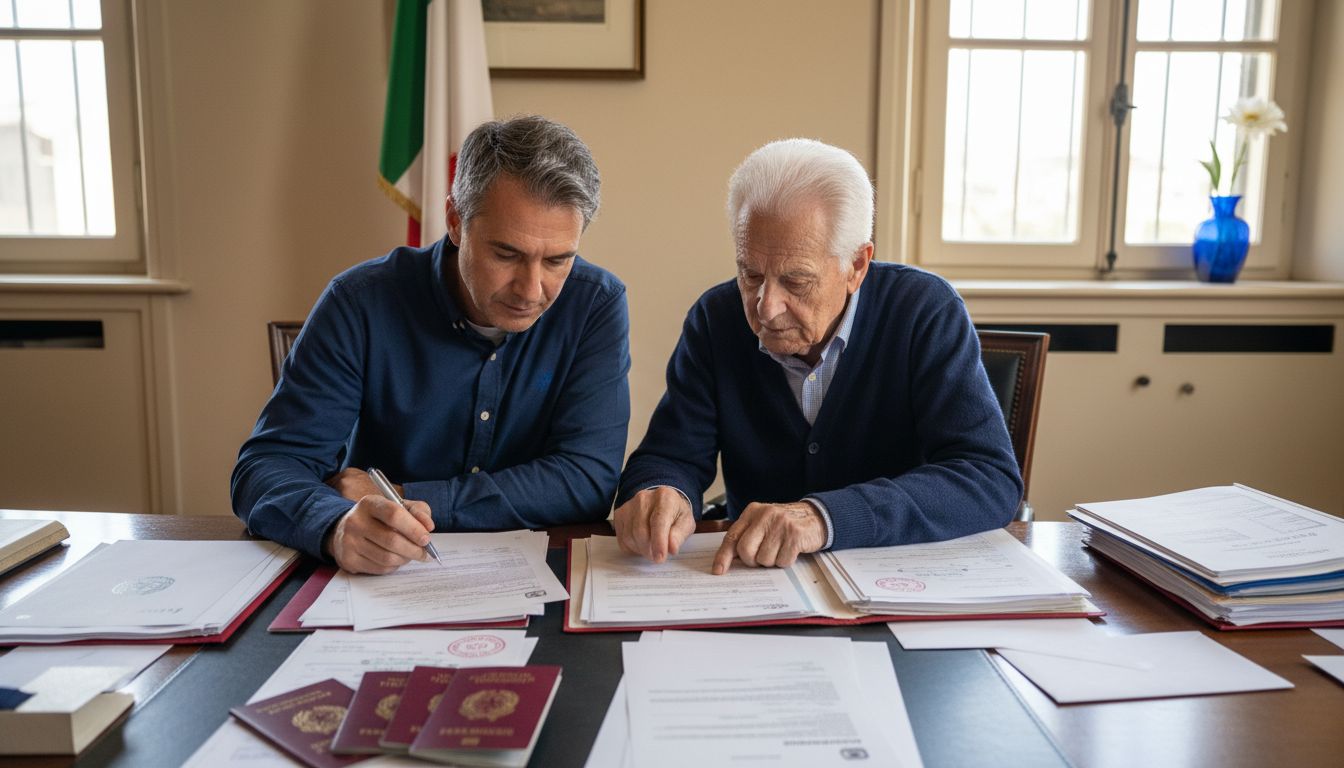
Key Exceptions: Dual Nationals and Residency Paths
Navigating the complex terrain of Italian citizenship requires understanding unique pathways that extend beyond traditional ancestry claims. Dual nationality and residency exceptions offer intriguing alternatives for those seeking connection to their Italian heritage.
According to the Italian Ministry of Interior, Italian law embraces dual nationality, allowing individuals to retain their original citizenship while acquiring Italian citizenship. This progressive approach eliminates the historical barrier of forced renunciation, creating opportunities for global citizens to maintain multiple cultural identities simultaneously.
Residency paths present another strategic avenue for citizenship acquisition:
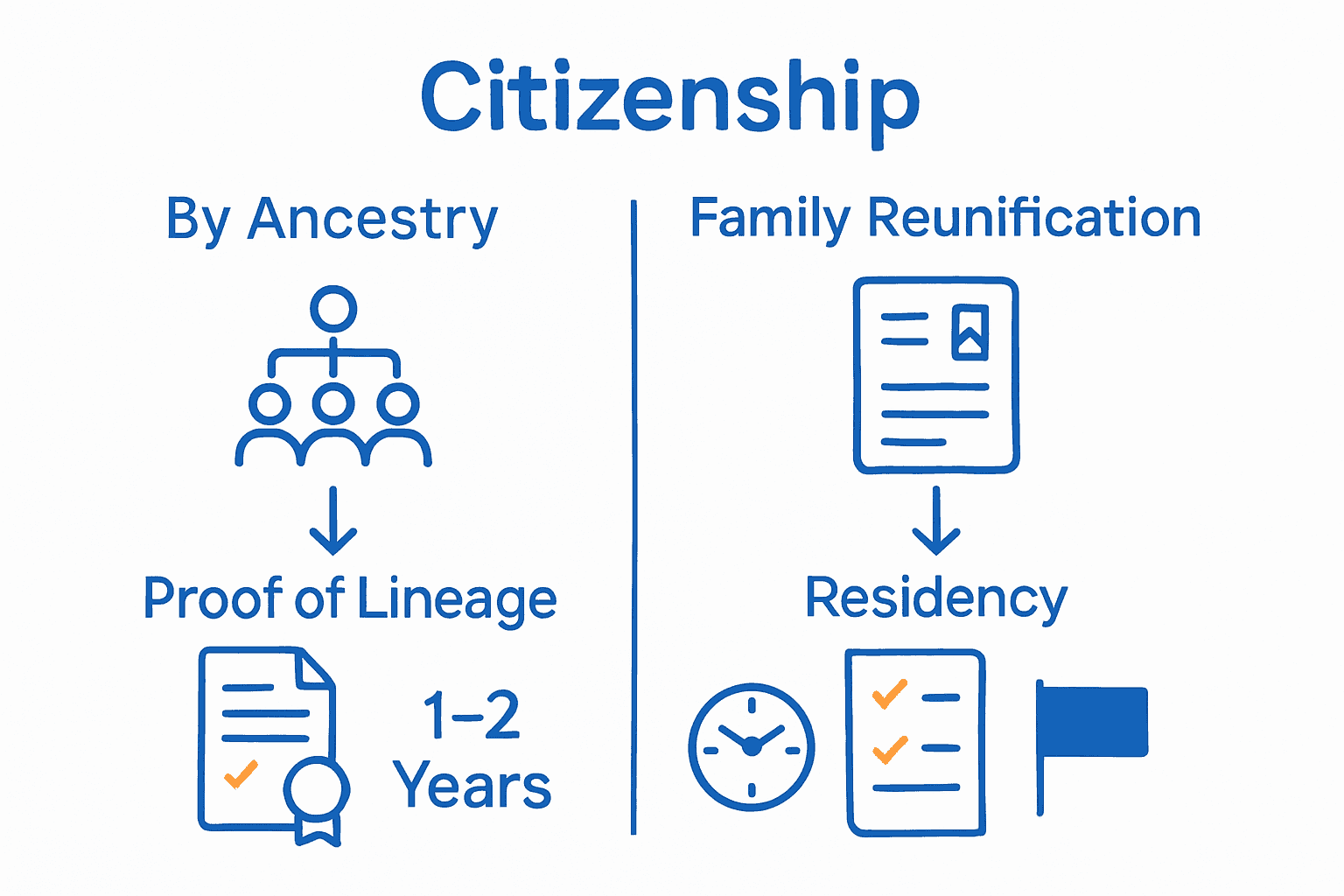
- Non-EU citizens can leverage family reunification provisions
- Specific income and housing criteria must be meticulously documented
- Continuous legal residence becomes a critical qualification factor
- Demonstrable integration into Italian social and economic systems matters
Home Affairs EC highlights that non-EU citizens can apply for family reunification, enabling potential pathways to residency and eventual citizenship. This process requires applicants to meet stringent financial and accommodation standards, transforming mere paperwork into a comprehensive life transition.
Ultimately, these exceptions represent more than legal technicalities – they’re bridges connecting personal histories, cultural roots, and contemporary global identities. Learn how to navigate these complex legal landscapes with our comprehensive guide to interpreting Italian legal documents.
Case Studies: Real Examples
These case studies demonstrate how different applicants successfully navigated Italian citizenship requirements, highlighting common challenges and effective solutions.
Canadian Family Reconnects After Three Generations
Background: A Canadian family discovered their great-grandfather emigrated from Naples in 1920 without renouncing Italian citizenship.
Challenge:
- Locating original birth and marriage certificates from Naples archives
- Proving uninterrupted citizenship transmission across three generations
- Navigating complex apostille requirements for Canadian documents
- Meeting strict timeline requirements for application submission
Solution:
- Engaged specialized legal counsel familiar with Italian citizenship law
- Requested vital records through Italian consulate in Toronto
- Compiled comprehensive family tree with supporting documentation
- Submitted application through judicial route due to consular delays
Result: The family successfully obtained Italian citizenship for three generations (parent, adult child, and minor grandchild) within 18 months. Total legal and document costs: approximately €8,500.
“Working with a lawyer who understood both Canadian and Italian systems made all the difference. We would have given up without professional guidance.” — M.R., Toronto
US Citizen Overcomes Maternal Line Challenge
Background: An American applicant sought citizenship through her Italian grandmother who emigrated in 1947.
Challenge:
- Citizenship transmission through maternal line (pre-1948 complication)
- Grandmother’s marriage to non-Italian citizen raised questions
- Limited Italian language proficiency for document translation
- Understanding judicial vs. administrative application routes
Solution:
- Pursued judicial recognition through Rome court (1948 rule case)
- Obtained certified translations of all US vital records
- Demonstrated grandmother never renounced Italian citizenship
- Hired Italian attorney to represent case in tribunal
Result: Court ruled in favor after 14-month process. Applicant gained citizenship along with her two children. Total investment: approximately €12,000 including legal fees and travel to Italy for final hearing.
“The 1948 maternal line rule almost stopped me, but the judicial route worked. It took patience and the right legal team.” — S.K., Boston
Australian Applicant Fast-Tracks Through Residency
Background: An Australian entrepreneur with Italian spouse chose residency path over ancestry due to document complications.
Challenge:
- Great-grandfather’s naturalization records incomplete
- Ancestry route would require extensive archival research in Sicily
- Time-sensitive business opportunity required faster solution
- Meeting Italian residency and income requirements
Solution:
- Leveraged marriage to Italian citizen for family reunification visa
- Established legal residence in Milan with proper documentation
- Demonstrated stable income from remote business operations
- Applied for citizenship after 2 years of continuous residence
Result: Obtained Italian citizenship in 30 months total (2 years residency + 6 months processing). Costs included visa fees (€116), residence permit (€80), and citizenship application (€250), plus legal consultation (€2,500).
“The residency route was faster and more straightforward than trying to reconstruct my great-grandfather’s paper trail. Plus, living in Italy helped me integrate.” — J.D., Melbourne
Each pathway to Italian citizenship presents unique challenges. Professional legal guidance, thorough documentation, and realistic timeline expectations are critical for success. Consider both ancestry and residency routes based on your specific circumstances.
2026 Deadline Extension for Minor Children
The journey of obtaining Italian citizenship for minor children is a nuanced process that demands careful attention to evolving legal landscapes and critical time-sensitive requirements. Families navigating this complex terrain must remain vigilant about potential changes and deadlines that could impact their children’s citizenship status.
Home Affairs EC confirms that as of October 2025, no specific deadline extension for minor children has been officially announced. This lack of definitive information underscores the importance of proactive legal preparation and continuous monitoring of regulatory updates.
Key considerations for minor children seeking Italian citizenship include:
- Precise documentation of parental lineage
- Timing of citizenship application before reaching legal age
- Potential requirements for parental consent
- Verification of uninterrupted citizenship transmission
- Potential implications of dual nationality status
The complexity of these requirements extends beyond simple paperwork. Families must strategically approach the citizenship process, understanding that each case carries unique genealogical and legal nuances. Interpreting the intricate details of Italian legal documents becomes crucial in navigating these challenges.
Ultimately, the path to citizenship for minor children represents more than a legal transaction – it’s a profound connection to cultural heritage, family history, and potential future opportunities. Careful, strategic planning can transform what seems like a bureaucratic process into a meaningful journey of cultural reconnection.
Alternatives: Fast-Track Residency and Other Options
Navigating the intricate landscape of Italian residency and citizenship demands creative strategies beyond traditional ancestry claims. Alternative pathways offer innovative approaches for individuals seeking to establish their connection to Italy, transforming bureaucratic challenges into opportunities for personal and professional growth.
Home Affairs EC highlights family reunification as a critical alternative route to residency. This pathway enables non-EU citizens with family members in Italy to apply for residency, provided they meet specific financial and housing requirements. The process goes beyond mere documentation – it’s about demonstrating genuine familial and economic integration.
Key alternative residency and citizenship strategies include:
- Family reunification with comprehensive documentation
- Vocational training programs offering economic integration
- Professional skill-based immigration opportunities
- Investment-driven residency permits
- Strategic employment connections within Italy
Home Affairs EC further reveals Italy’s commitment to migrant integration through innovative training programs. These initiatives not only provide vocational skills but also create structured pathways to residency and potential citizenship through economic contribution.
Learn how to navigate these complex legal landscapes with our comprehensive guide to interpreting Italian legal documents, transforming bureaucratic complexity into a strategic opportunity for personal and professional reinvention.
Unlock Your Italian Heritage with Expert Legal Guidance
Ready to Begin Your Citizenship Journey?
Claiming Italian citizenship by ancestry can feel overwhelming due to complex requirements like uninterrupted citizenship proof and timely legal declarations. If you are trying to navigate ius sanguinis eligibility or deal with nuances around dual nationality and residency exceptions, you are not alone. The journey to reconnect with your Italian roots is deeply personal but often filled with legal challenges that demand precise and informed support.
Take control of your citizenship process today with professional assistance tailored for international clients. Explore valuable insights and practical advice in our Legal Tips in Italy • Avv. Alfredo Esposito section and find resources made specifically for foreigners in our Expats in Italy – Legal Guide and Resources.
Ready to start your path toward Italian citizenship with confidence and clarity?
Frequently Asked Questions
Italian citizenship by ancestry, or ius sanguinis, allows descendants of Italian nationals to claim citizenship through direct lineage, regardless of their current location.
Applicants must provide proof of direct lineage from an Italian ancestor, documentation of uninterrupted citizenship transfer, and verification of the ancestor’s Italian citizenship status at the time of emigration.
Italian law allows dual nationality, meaning individuals can retain their original citizenship while acquiring Italian citizenship, thus avoiding the need for forced renunciation.
Minor children can claim Italian citizenship if their parents establish proof of lineage and complete the application process before the child reaches legal age, while also considering parental consent and uninterrupted citizenship transmission.
Recommended